|
| Navigation: Home > Services > Program Details |
|
“our staff are from a broad range of cultural backgrounds, ensuring quality care to a diverse range of clients" |
Treatment Program Details
Currently Jarrah House has four female medical practitioners who assess and monitor the detoxification and general health needs of women residents within a holistic healthcare framework. A number of medical services, such as medical check-ups, are available as part of the treatment program. Full details of these services are available from the Jarrah House Annual Reports (coming soon). Jarrah House offers three programs for treatment:
Stabilisation (Detoxification)
- A 21 day medically supervised detoxification program.
- Women have access to either medicated or non-medicated detoxification from all drugs, selective detoxification, or detox using buprenorphine.
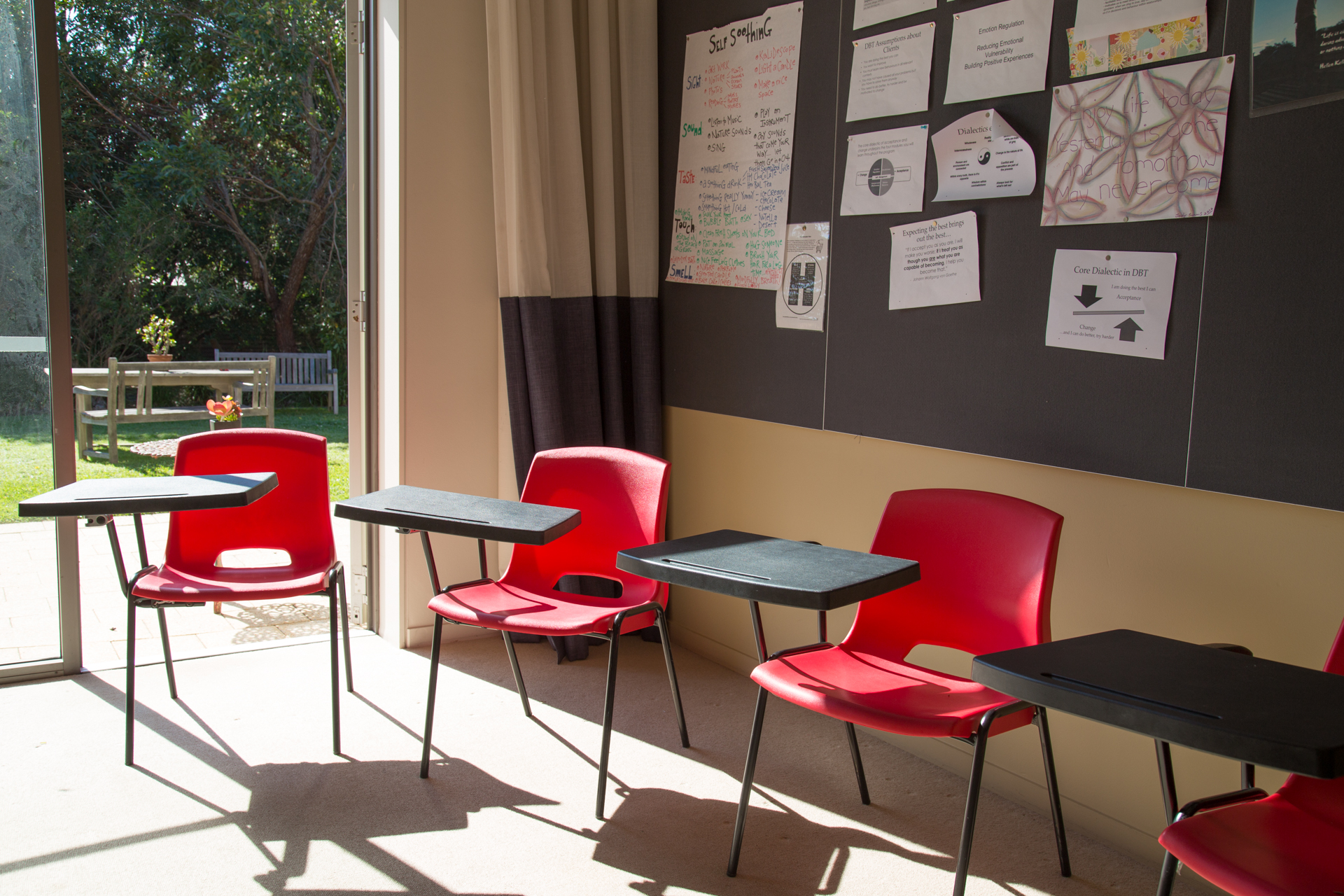
- Group therapy program using a Cognitive Behaviour Therapy (CBT) and Dialectical Behaviour Therapy focus (DBT).
- Health and educational groups.
- Relaxation and yoga groups.
- Art threapy groups.
- Individualised case management and counselling.
- Parenting assessment, educational groups, intervention, and referral for families. School age children are able to attend the local school.
- Daily gentle walking in beautiful lanscaped grounds by the sea.
Skills (Rehabilitation)
- The Jarrah House Skills Program is a six-week program for women who are detoxified from substances, have some relapse prevention skills from a previous program, and who require further skill development to prevent relapse and/or to prepare for more in-depth work.
- Suitability for this program will be assessed by the Skills Coordinator upon application.
- The program content is drawn from Dialectical Behaviour Therapy (DBT) (Linehan, 1999) and is designed to help women with
substance misuse issues who have difficulty regulating their emotions, behaviour, relationships and/or sense of self.
- It focuses on skill development in four key areas:
- 1. Mindfulness enables people to experience the present moment more fully while focusing less on painful experiences. Importantly, mindfulness also gives people the tools to overcome habitual negative judgments about themselves and others.
- 2. Distress Tolerance Skills help people to cope better with upsetting events and experiences by building resilience and developing new ways to survive difficult circumstances without doing anything to make the situation worse.
- 3. Emotion Regulation Skills help people to identify and understand emotions without being overwhelmed by them. The goal is to be able to manage feelings without resorting to destructive behaviours.
- 4. Interpersonal Effectiveness Skills provide tools for expressing needs and feelings, set limits and negotiate solutions while maintaining relationships and self respect.
- A continuation of educational groups, yoga, meditation, walking and Art therapy.
- Case management and referrals.
Continuing Care
- Individual discharge planning and referral to resources in your area.
- Continuing Care Outpatient Group (JOGS) for women who have completed the program.
- Women who have completed the Jarrah House program are invited to attend an annual event "Ignite" as continuing support and networking.
|
|
|
|
|
|